
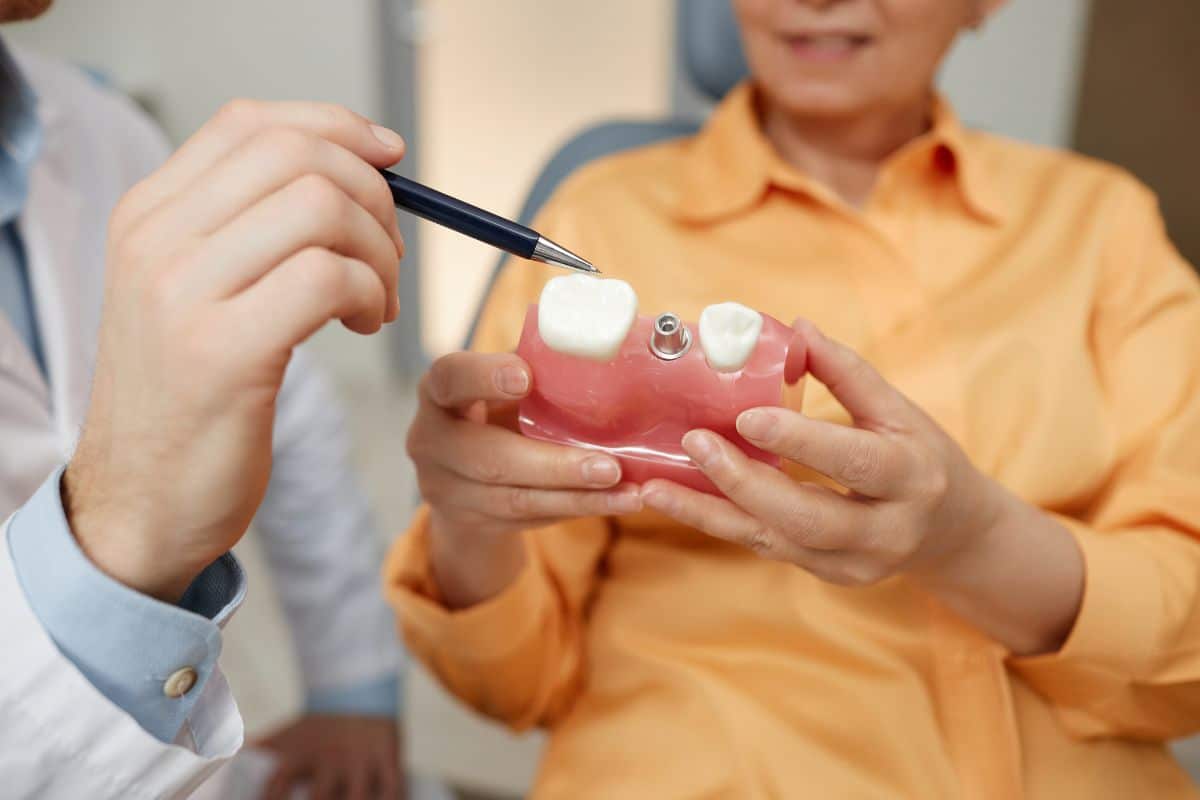
Being told that you have jawbone loss does not automatically mean you cannot replace missing teeth with implants. Bone density, ridge width, gum health, medical history, and the location of the missing tooth all influence candidacy. Modern imaging and bone-building procedures have made treatment possible for many people who were previously told they lacked enough bone.
At Dr Jason Augustine DDS, J. Augustine evaluates the entire mouth before recommending care. If you are considering dental implants in Phoenix, a detailed assessment can reveal how much bone remains and whether additional preparation may improve implant stability. The right plan depends on your anatomy, health, and restoration goals, not simply on whether bone loss is present.
Why Does Jawbone Loss Occur?
Jawbone needs regular stimulation from tooth roots to maintain its volume. After a tooth is removed or lost, that stimulation stops. The surrounding bone may gradually shrink in height, width, or density.
Other causes of bone loss include:
- Advanced gum disease
- Long-term use of removable dentures
- Dental infections or untreated abscesses
- Facial injury or oral trauma
- Natural changes associated with aging
- Certain health conditions and medications
- Delaying tooth replacement for several years
Bone resorption varies from person to person. Someone missing a tooth for six months may have a different ridge shape than someone who has lived with tooth loss for a decade.
Can You Get Dental Implants With Low Bone Density?
Yes, many people with reduced bone volume can still qualify. However, the jaw must provide enough support to hold the implant securely during healing. This stability allows osseointegration, the process through which living bone bonds with the implant surface.
According to the American Academy of Periodontology, adequate jawbone and healthy gum tissue are important factors in candidacy. The organization also explains that ridge modification and sinus augmentation may help develop bone in areas where the existing volume is insufficient.
A dentist may recommend rebuilding the area before placing dental implants. In selected cases, grafting and implant placement can occur during the same visit. More substantial defects may require staged treatment and several months of healing.
How Is Your Bone Evaluated?
A visual examination cannot show the complete shape or density of the jaw. A comprehensive evaluation may include:
- A review of your medical and dental history
- An examination of your gums and remaining teeth
- Digital X-rays to identify bone levels and infection
- Three-dimensional imaging to measure bone height and width
- An assessment of the sinus cavity and nearby nerves
- A review of your bite and tooth-replacement goals
Three-dimensional scans help the dentist study the proposed placement area from multiple angles. This information supports safer positioning and helps determine whether grafting may be needed.
At Dr Jason Augustine DDS, patients interested in dental implants in Phoenix can receive an individualized evaluation based on their current oral condition. You can visit our dental practice to learn whether your remaining bone can support treatment directly or needs to be strengthened first.
Which Procedures Can Rebuild Lost Bone?
The recommended approach depends on the location and extent of the deficiency.
Bone Grafting
A bone graft adds material to an area where the ridge has become too thin or shallow. The graft acts as a framework that supports new bone formation during healing.
Ridge Augmentation
Ridge augmentation restores part of the jaw’s natural contour after significant resorption. It may create enough height or width for future implant placement.
Sinus Lift
The upper back jaw may have limited bone beneath the sinus. A sinus lift raises the sinus membrane and places grafting material below it, creating more room for implant support.
Socket Preservation
When performed after an extraction, socket preservation can reduce ridge shrinkage. It may simplify later treatment, although some natural remodeling can still occur.
The American Association of Oral and Maxillofacial Surgeons notes that implant reconstruction may require hard-tissue or soft-tissue grafts depending on the patient’s condition.
What Makes Someone a Suitable Candidate?
You may qualify for dental implants despite bone loss if you:
- Have healthy or well-managed gum tissue
- Can maintain consistent brushing and flossing
- Do not have an uncontrolled oral infection
- Are healthy enough for a minor surgical procedure
- Have manageable medical conditions
- Are willing to complete grafting when recommended
- Can avoid smoking during healing
Diabetes, osteoporosis, or a history of gum disease does not always exclude treatment. These conditions require careful review and appropriate management. People taking antiresorptive medications should disclose them because certain drugs may affect jaw healing.
When Might Treatment Need to Be Delayed?
Placement may be postponed if active gum disease, decay, or infection is present. Uncontrolled blood sugar, heavy tobacco use, poor oral hygiene, or certain medication-related risks may also need attention first.
Delaying treatment is not necessarily a rejection. It often means the mouth or overall health must be stabilized before moving forward. Treating infection, improving gum health, or completing bone grafting may turn a high-risk situation into a more predictable one.
Rebuild Your Smile With a Clear Plan
Low bone density should not stop you from exploring your options. Modern diagnostics can identify usable bone and determine whether augmentation could improve support. At Dr Jason Augustine DDS, J. Augustine can explain the findings, expected timeline, and appropriate next steps.
If you want to explore dental implants in Phoenix, book an appointment for a comprehensive evaluation. A personalized assessment is the only reliable way to determine whether you can proceed now or need preparatory care first.
Frequently Asked Questions
1. How much bone is needed for dental implants?
The required amount depends on the implant’s size, location, and surrounding anatomy. A three-dimensional scan can measure the available ridge and show whether additional support is needed. An in-office evaluation provides a more reliable answer than a standard X-ray alone.
2. Can severe bone loss be treated?
Severe loss may be addressed through ridge augmentation, sinus elevation, or staged grafting. Treatment can take longer because the new bone needs time to mature. A clinical examination will determine whether reconstruction is appropriate for your condition.
3. How long does a bone graft take to heal?
Many grafts need several months to integrate, although healing time varies with the graft size, location, and general health. Some patients can receive an implant at the same visit. Others need to wait until the area has developed sufficient strength.
4. Are dental implants possible after years of missing teeth?
They may still be possible, but long-term tooth loss often causes greater ridge resorption. Imaging can reveal whether usable bone remains and which procedure may restore support. Scheduling an assessment is the first step toward understanding your options.
5. Does osteoporosis automatically disqualify me?
No. Osteoporosis alone does not always prevent implant treatment. Your dentist should review your bone health, medications, and other risk factors before making a recommendation. Medical coordination may also be appropriate in certain cases.
6. Can gum disease affect implant candidacy?
Yes. Active gum disease can damage supporting tissues and increase the risk of complications. It generally needs to be controlled before implant placement. Ongoing professional cleanings and consistent home care are also important after treatment.
