
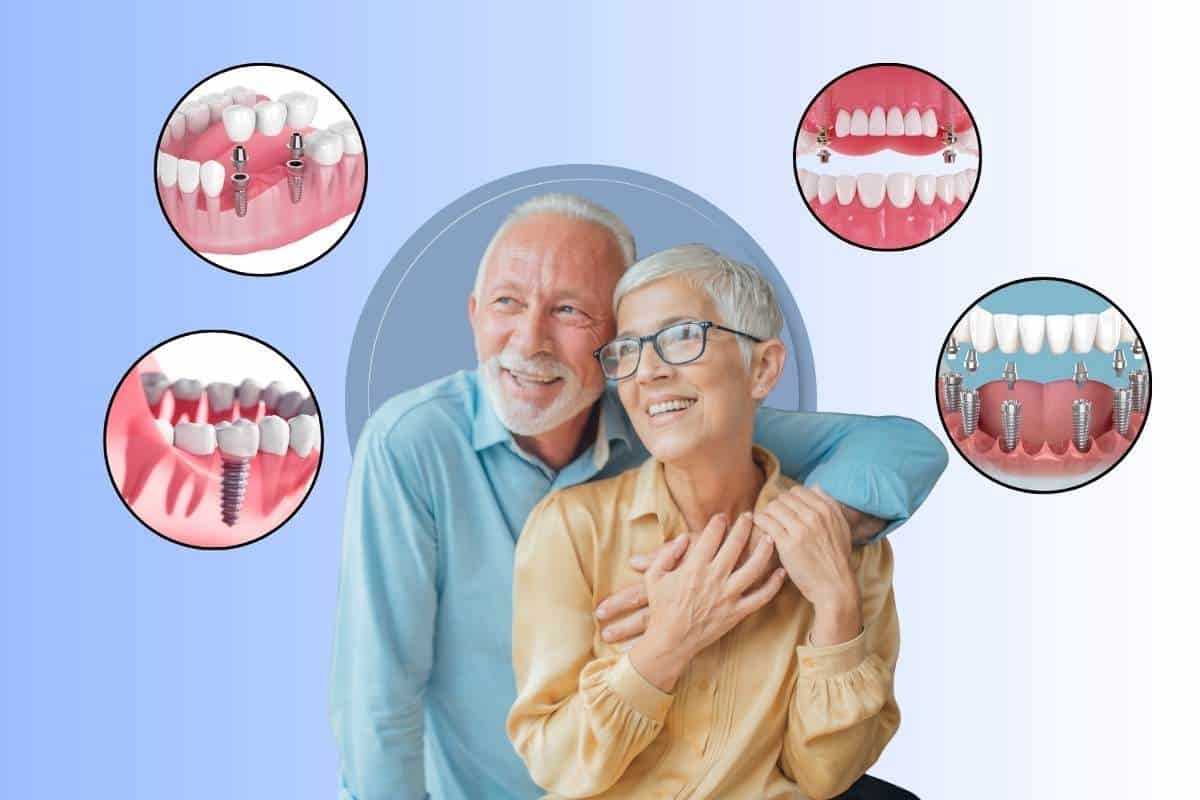
Missing teeth can affect more than the appearance of your smile. They may make it harder to chew, affect your speech, and change the way your remaining teeth function. Dental implants offer a long-term tooth-replacement option that can restore the function and appearance of your smile.
Unlike traditional dentures, dental implants are placed in the jawbone to replace the root portion of a missing tooth. They can support a dental crown, bridge, or implant-supported denture, depending on your treatment needs.
If you are considering dental implants, understanding how they work, their benefits, the treatment process, and available tooth-replacement options can help you prepare for a conversation with your dentist.
What Are Dental Implants?
Dental implants are small posts, commonly made from titanium, that are surgically placed in the jawbone to replace the root of a missing tooth. After the implant heals and integrates with the surrounding bone, it can support a replacement tooth or other dental restoration.
A typical dental implant restoration consists of three components:
- Implant post: The portion placed in the jawbone to provide a foundation for the replacement tooth.
- Abutment: A connector that attaches the implant to the dental restoration.
- Dental restoration: The visible replacement, such as a crown, bridge, or implant-supported denture.
The type of restoration you need depends on the number of missing teeth, the condition of your oral tissues, and your overall treatment plan. A single implant may support one crown, while multiple implants can support a bridge or full-arch restoration.
Dental implants are designed to provide a stable foundation for replacement teeth. Their success and long-term performance depend on factors such as implant integration, oral hygiene, and the health of the surrounding tissues.
What Are the Benefits of Dental Implants?
Dental implants are one of several options for replacing missing teeth and can provide a natural tooth replacement that restores both function and the appearance of your smile. They offer specific benefits that may make them suitable for certain patients.
1. A Stable Foundation for Replacement Teeth
Dental implants are anchored in the jawbone, providing support for a crown, bridge, or implant-supported denture. This foundation may help improve chewing function and stability compared with some removable tooth-replacement options.
The level of stability depends on the type of restoration, implant placement, healing, and individual treatment factors.
2. A Natural-Looking Smile
Dental implant restorations are designed to complement the appearance of your natural teeth. A crown can be customized to match the surrounding teeth in terms of shape, size, and color.
The final appearance depends on factors such as the restoration design, gum tissue, implant positioning, and treatment planning.
3. Replacing a Missing Tooth Without Supporting It With Neighboring Teeth
A traditional tooth-supported bridge generally relies on adjacent teeth for support and may require those teeth to be prepared.
A single dental implant with a crown provides an alternative that does not require the replacement tooth to be supported by neighboring natural teeth. Whether this option is appropriate depends on your oral health and clinical circumstances.
4. Options for Replacing Multiple Missing Teeth
Dental implants can be used in several treatment situations, including:
- Replacing a single missing tooth.
- Supporting a bridge when multiple teeth are missing.
- Supporting a full-arch restoration for patients who need to replace many or all teeth in an arch.
- Improving the stability of certain implant-supported dentures.
The number of implants and the type of restoration depend on factors such as bone structure, oral health, and treatment goals.
5. A Long-Term Tooth-Replacement Option
Dental implants are intended to provide a durable foundation for replacement teeth. However, the implant and the visible restoration have different maintenance and replacement requirements.
Regular dental visits, proper oral hygiene, and monitoring of the tissues surrounding the implant are important for maintaining oral health and supporting the long-term function of the restoration.
How Do Dental Implants Compare With Other Tooth-Replacement Options?
If you are missing one or more teeth, dental implants, traditional bridges, and removable dentures are among the options you may discuss with your dentist. Each treatment has different requirements, benefits, and maintenance considerations.
The right choice depends on factors such as the number of missing teeth, oral health, bone support, treatment preferences, and budget.
Dental Implants vs. Bridges vs. Dentures
| Feature | Dental Implants | Traditional Bridges | Removable Dentures |
|---|---|---|---|
| How they replace teeth | An implant supports a crown, bridge, or denture. | A replacement tooth is supported by neighboring teeth. | Replacement teeth are held by a removable denture base. |
| Support | An implant post is placed in the jawbone. | Uses supporting natural teeth, depending on the bridge design. | Rests on the gums and supporting oral structures; some dentures may be implant-retained. |
| Treatment process | May involve surgery and a healing period before the final restoration. | Usually involves preparing supporting teeth and placing the bridge. | Involves impressions or digital scans, fabrication, and fitting of the denture. |
| Removal | The implant is not designed to be removed by the patient. The restoration may be fixed or removable, depending on the design. | Generally fixed in place. | Designed to be removed for cleaning and maintenance. |
| Adjacent teeth | A single implant-supported crown does not require neighboring teeth to support the replacement tooth. | Traditional bridges generally rely on supporting teeth. | Does not require adjacent teeth to support the denture in the same way as a traditional bridge. |
| Maintenance | Requires daily oral hygiene, professional monitoring, and care of the restoration. | Requires daily cleaning and attention to the supporting teeth and bridge. | Requires daily cleaning, appropriate storage, and professional evaluation of fit. |
| Suitability | Depends on bone support, oral health, overall health, and treatment planning. | Depends on the condition of the supporting teeth and the missing-tooth area. | May be considered for partial or complete tooth replacement based on individual needs. |
What Is the Dental Implant Process?
The dental implant process varies from patient to patient. Some treatments involve multiple stages, while certain procedures may be combined depending on your condition and individualized treatment plan.
Step 1: Consultation and Evaluation
The first step is a comprehensive examination to determine the most appropriate treatment approach. Your evaluation may include:
- A review of your dental and medical history.
- An examination of your gums and remaining teeth.
- An assessment of your jawbone volume and quality.
- Dental X-rays or 3D imaging, when indicated.
- A discussion of the number of teeth that need to be replaced.
- A review of treatment options and the expected healing process.
We will use this information to develop an individualized treatment plan based on your oral health, needs, and treatment goals.
Step 2: Preparing the Treatment Site
Some patients have sufficient bone volume and healthy tissues for implant placement without additional procedures. Others may need treatment before an implant can be placed.
Depending on your needs, preparation may include:
- Treatment for existing gum disease.
- Removal of a damaged or unrestorable tooth.
- Bone grafting when there is insufficient bone support.
- Other procedures based on your anatomy and treatment requirements.
Not every patient needs bone grafting. We will determine whether additional treatment is appropriate through a comprehensive clinical evaluation.
Step 3: Placing the Dental Implant
During implant placement, we surgically position the implant post in the jawbone. The procedure and anesthesia options will depend on your treatment plan and individual needs.
After placement, the implant needs time to heal and integrate with the surrounding bone. This process is known as osseointegration.
Step 4: Healing and Osseointegration
During osseointegration, the jawbone forms a connection with the implant surface. This process helps establish the stable foundation needed for the final restoration.
Healing time varies depending on factors such as implant location, bone quality, additional surgical procedures, and individual healing. Our team will monitor your progress and determine when the implant is ready for the next stage of treatment.
Step 5: Attaching the Abutment and Restoration
After the implant has healed sufficiently, we may place an abutment to connect the implant to the final restoration.
The restoration may include:
- A dental crown: Used to replace a single missing tooth.
- A dental bridge: Used to replace multiple missing teeth.
- An implant-supported denture or full-arch restoration: Used to replace several or all missing teeth, depending on your treatment plan.
We will design the restoration to fit your mouth and meet your treatment requirements. Follow-up appointments may be needed to evaluate the fit, function, appearance, and health of the surrounding tissues.
Caring for Your Dental Implants
Maintaining good oral hygiene and attending regular dental visits are important after implant treatment. Your maintenance routine may include:
- Brushing as directed by your dental professional.
- Cleaning between teeth and around implant restorations.
- Attending routine examinations and professional cleanings.
- Following post-surgical care instructions.
- Reporting persistent discomfort, swelling, bleeding, or changes in implant stability.
If you experience any concerns with your dental implant, contact our office to schedule an evaluation and avoid delaying necessary treatment.
Are You Considering Dental Implants?
Dental implants may be an option if you have one or more missing teeth and want to explore a stable tooth-replacement solution. The appropriate treatment depends on your oral health, bone support, medical history, and individual goals.
A consultation with Dr. Jason Augustine can help you understand your tooth-replacement options and explore whether dental implants may be appropriate for your situation.
If you are considering dental implants, visit our dental practice in Phoenix to discuss your needs, treatment options, and next steps.
Frequently Asked Questions About Dental Implants
1. Are dental implants better than dentures?
Dental implants and dentures serve different treatment needs. Implants offer a foundation anchored in the jawbone, while conventional dentures are removable. Your dentist can help you compare the options based on your oral health, treatment preferences, and budget.
2. Can dental implants replace multiple missing teeth?
Yes. Dental implants can support bridges or full-arch restorations, depending on the number of missing teeth and your treatment plan. The number of implants needed varies based on the restoration and individual clinical factors.
3. Does everyone need a bone graft before getting dental implants?
No. Bone grafting is not required for every patient. It may be recommended when there is insufficient bone to provide suitable implant support. A clinical evaluation and imaging can help determine whether additional bone treatment is needed.
4. How long does dental implant treatment take?
Treatment time varies depending on your oral health, whether additional procedures are required, and the healing process. Some cases can be completed in fewer stages, while others require several months of treatment and healing.
5. How should I care for dental implants?
Care includes maintaining good oral hygiene, following your dentist’s instructions, and attending regular dental visits. Your dentist can recommend a routine suited to your implant restoration and oral health.
6. What should I discuss during a dental implant consultation?
Ask about your treatment options, required procedures, healing time, expected maintenance, and total treatment cost. These details can help you make an informed decision about your dental care.
